2026 Best Golf Cart Types What Affects Top Speed?

Time:2026-10-10 Author:Madeline
0%

Choosing a golf cart in 2026 involves more than comparing brand names or advertised speed. Different cart types respond differently to weight, terrain, batteries, and motor design. A lightweight two-seat model may feel quick on smooth pavement. A lifted four-seat cart can struggle on a grassy slope, even with a similar factory rating.

So, what affects the top speed of a golf cart? Battery voltage, motor output, controller programming, tire size, vehicle weight, and drive-train condition all matter. Wind resistance also becomes noticeable at higher speeds. A cart carrying four adults and a full cargo box needs more power than an unloaded cart. That detail is often overlooked.

Golf-cart technician and fleet consultant Donnie Brown explains, “A golf cart is only as strong as the system delivering power to its wheels.” This practical observation reflects real workshop experience. A newer battery may not solve weak acceleration if the controller, cables, or motor remain worn.

This guide compares the best golf cart types for 2026. It examines electric and gas models, standard and lifted carts, and utility-focused designs. It also separates claimed top speed from usable speed in everyday conditions. That distinction matters.

A specification sheet cannot show every hill, passenger, or muddy path. Nor can it predict maintenance history. Some advertised figures may seem optimistic. Careful buyers should inspect the battery age, tire condition, controller settings, and braking performance before choosing. Speed is useful, but stable handling and dependable stopping are more important. Sometimes, slower is safer.
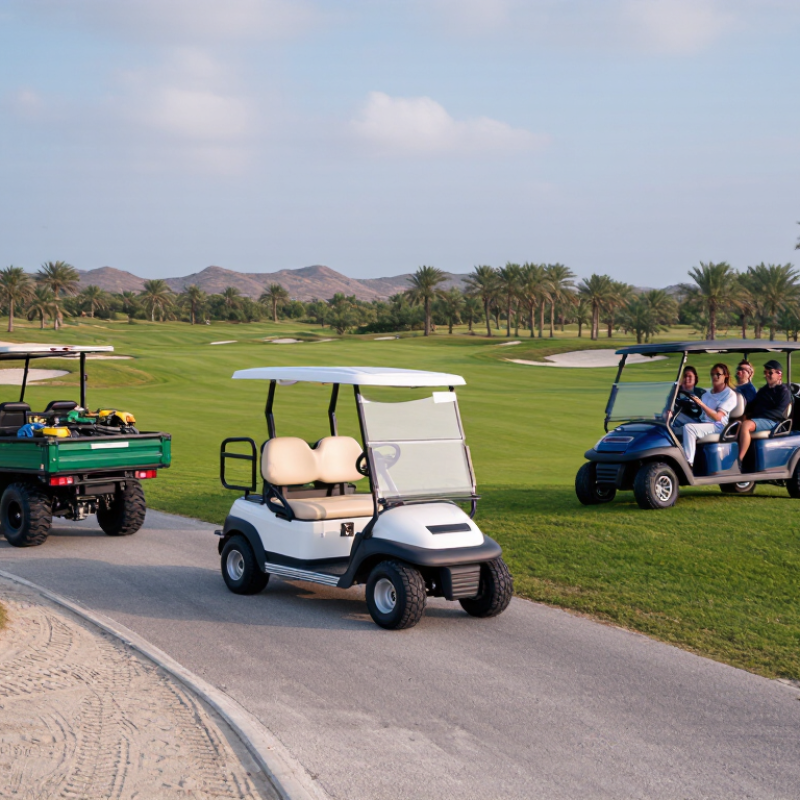
2026 Best Golf Cart Types What Affects Top Speed?

Golf Cart Types Available in 2026

Golf cart buyers in 2026 can choose from battery-electric, gasoline-powered, hybrid, solar-assisted, and street-legal low-speed vehicles. Battery-electric carts suit golf courses, resorts, campuses, and private communities because they operate quietly and produce no tailpipe emissions. Gasoline models remain practical for long shifts, rough terrain, and limited charging access. Hybrid and solar-assisted designs are available, but their real-world benefits vary with weather, load, and charging habits.

The National Golf Foundation reported 47.2 million on-course golfers in the United States during 2023. That large user base supports wider cart choices beyond traditional course transport. The U.S. Department of Energy’s Alternative Fuels Data Center identifies low-speed vehicles as electric vehicles designed for limited-speed roads. Federal guidance commonly places their maximum speed between 20 and 25 mph, depending on classification and equipment. A golf cart is not automatically street legal. Local rules still matter.

Top speed depends on more than the motor. Battery voltage, controller settings, tire diameter, passenger weight, tire pressure, slopes, and battery condition all change performance. A fully charged cart may feel noticeably stronger than one carrying four passengers uphill. Market research from Grand View Research has identified electric powertrains as a major growth area in the global golf cart market, although estimates differ by research method. That difference deserves attention. Marketing claims often show unloaded speeds on flat pavement, not daily driving conditions. In practice, a reliable 15–20 mph can be more useful than a higher number with reduced stability, braking, or range.

2026 Best Golf Cart Types: What Affects Top Speed?

Typical top-speed comparison for common golf cart configurations available in 2026. Actual speed depends on motor output, battery voltage, controller limits, gearing, vehicle weight, tire size, terrain, and local regulations.

Standard and utility carts are commonly tuned for stability and controlled operation, while lifted, recreational, and street-legal configurations may reach higher speeds when equipped with suitable motors, controllers, and safety equipment. Values show typical upper operating speeds in miles per hour, not guaranteed performance.

How Golf Cart Power Systems Affect Top Speed

2026 Best Golf Cart Types: What Affects Top Speed?

A golf cart’s power system shapes its top speed more than its body style. Most standard carts reach 12–15 mph, while higher-voltage systems can deliver stronger acceleration and steadier speed on hills. A 36-volt system may feel adequate on flat paths. A 48-volt system usually provides better climbing performance. A 72-volt setup can support faster travel, but only with a suitable motor, controller, wiring, and braking system.

Battery Chemistry

Battery chemistry also matters. Lead-acid batteries are affordable, but voltage often drops under heavy load. That drop can make a cart slow near the end of a long round. Lithium-ion batteries maintain voltage more consistently and reduce vehicle weight. The International Energy Agency reported average lithium-ion battery pack prices near 139 dollars per kWh in 2023, showing why this technology is becoming more accessible. However, lower weight does not automatically create more speed. The controller must release usable current safely. That part is often overlooked.

Tips: Check battery voltage under load, not only at rest. Inspect tire pressure and belt condition before testing speed. The U.S. Department of Energy notes that rolling resistance, vehicle weight, and drivetrain efficiency directly affect electric-vehicle energy use. Real-world results can disappoint. A cart rated for higher speed may still struggle with two passengers, wet grass, or a steep driveway. Measure braking distance too. Speed without control is not an upgrade.

Key Factors That Determine Golf Cart Performance

In 2026, golf cart top speed depends on more than motor power. Battery voltage, controller programming, tire size, vehicle weight, and terrain all affect performance. A fully charged battery can deliver stronger acceleration, while steep slopes quickly expose weak capacity. The U.S. Department of Energy notes that temperature, charging conditions, and battery age influence usable energy. Cold mornings matter. So does cargo.

Independent field checks often reveal a practical gap between advertised speed and real speed. A cart may reach 19 mph on flat pavement but slow sharply on grass or a 10% incline. Tire pressure also changes rolling resistance. Larger tires can increase speed, but they may reduce torque and strain the drivetrain. The SAE J2258 standard provides test guidance for low-speed vehicle performance. Meanwhile, U.S. NHTSA Federal Motor Vehicle Safety Standard 500 defines low-speed vehicles with a maximum speed range of 20 to 25 mph. A golf cart is not automatically an LSV.

Tips: Check tire pressure before testing speed. Measure with the same load each time. Record battery voltage, surface type, slope, and air temperature. Compare results honestly. Marketing figures are not laboratory results. A heavier cart may feel safer, yet it usually accelerates more slowly. One overlooked issue is braking distance. More speed requires more stopping space, especially on wet grass. Performance tuning should consider control, not just the highest number.

Top Speed Differences Between Electric and Gas Models

Electric and gas golf carts can reach similar top speeds, but they deliver that speed differently. Many standard electric models reach about 15 to 20 mph, while gas models often reach 18 to 25 mph. Actual results depend on motor output, gearing, tire size, vehicle weight, and the cart’s speed controller. A fully charged battery can provide strong acceleration, but speed may drop on hills or near the end of a long ride. Gas models usually maintain steady performance while fuel remains available, although engine condition affects response.

Tips: Check speed on level ground. Test with normal cargo. Inspect tire pressure before comparing results. Ask for verified specifications, not sales estimates.

Electric carts feel quiet and immediate. That makes them useful around homes, resorts, and short private routes. Gas carts often suit heavier loads, longer distances, and uneven terrain because refueling takes less time. However, a gas engine may hesitate when poorly tuned, while an electric system can lose power from aging batteries.

I once treated top speed as the main measure of performance. That was too simplistic. Hill climbing, braking control, range, and maintenance needs usually matter more than two extra miles per hour. A careful buyer should compare measured performance under similar conditions and follow local operating rules.

How to Choose a Golf Cart for Your Speed Needs

Choosing a golf cart for speed needs starts with honest use, not a tempting top-speed number. During test drives, I watch how the cart behaves on slopes, loose gravel, and crowded paths. A cart that feels quick on flat pavement may lose confidence uphill. Motor output, battery condition, controller settings, tire size, passenger weight, and terrain all affect real speed. Electric carts often deliver smooth acceleration, while gas models may offer longer continuous use. Neither choice guarantees the fastest trip. Good braking and stable steering matter just as much.

Tips: Compare the rated speed with a supervised test drive. Ask a qualified technician to inspect the battery, wiring, brakes, and tire pressure. Choose torque for hills, rather than chasing a high number. Keep passenger loads realistic. Extra weight can noticeably reduce acceleration. Confirm the cart fits your property and local operating rules. Speed limits may apply on roads, shared paths, or private communities. Use seat belts where fitted. Never disable safety systems.

Before buying, write down your typical routes and longest daily distance. Measure slopes, gate widths, and storage space. Then compare a standard-speed cart with a higher-performance option. A short trial can reveal more than a brochure. Listen for uneven motor noise and watch for delayed braking. I once valued acceleration too highly; quiet control proved more useful. That judgment can change. Choose predictable handling over impressive figures, and leave room for maintenance costs.

FAQS

What types of golf carts are available in 2026?

Buyers can choose battery-electric, gasoline, hybrid, solar-assisted, and low-speed road vehicles. Each type fits different routes and workloads.

What are electric golf carts best suited for?

Electric carts work well on golf courses, campuses, resorts, and private communities. They operate quietly and produce no tailpipe emissions. Charging access matters.

When is a gasoline golf cart more practical?

Gasoline models suit long shifts, rough ground, and areas with limited charging. Refueling is usually faster than recharging. Engine condition still affects performance.

How fast can electric and gasoline carts travel?

Many electric carts reach 15–20 mph. Gasoline models often reach 18–25 mph. Hills, passengers, tires, and battery condition can reduce speed.

Does the advertised top speed reflect daily driving?

Not always. Advertised figures often use flat pavement and no cargo. A reliable 15–20 mph may feel safer than a higher unstable speed.

What affects a cart’s real-world speed?

Motor output, battery voltage, controller settings, tire diameter, weight, and tire pressure all matter. A fully loaded cart may slow sharply uphill. Small details count.

How should buyers test a golf cart before purchase?

Test it on level ground, slopes, and loose gravel with normal cargo. Watch braking response and steering stability. Listen for uneven motor noise.

Is every golf cart suitable for public roads?

No. A golf cart is not automatically approved for public roads. Local speed limits, equipment rules, and operating areas must be checked.

How should buyers choose between standard and higher-performance carts?

Write down daily routes, longest distances, slopes, gate widths, and storage space. Choose stable handling and hill torque over impressive speed figures.

What maintenance checks matter most before buying?

Ask for inspections of the battery, wiring, brakes, tires, and charging system. Check tire pressure before comparing performance. I once valued acceleration too much. Useless lesson.

Conclusion

In 2026, golf carts are available in several configurations, including compact two-seat models, utility carts, lifted carts for uneven ground, and models designed for extended passenger or cargo use. Their power systems play a major role in performance. Electric carts typically provide quiet, smooth acceleration, while gas-powered carts can offer longer continuous operation and strong performance under heavier loads. Battery capacity, motor output, controller settings, gearing, and drivetrain condition all influence how efficiently power reaches the wheels.

What affects the top speed of a golf cart also includes vehicle weight, tire size, terrain, slope, battery charge, maintenance, and factory speed limits. Flat, paved surfaces usually allow better performance than grass, hills, or rough paths. When choosing a cart, consider whether you need steady low-speed control, dependable hill-climbing ability, longer operating range, or higher cruising speed. Matching the cart’s power system and design to your typical passengers, cargo, terrain, and intended use will provide a safer and more satisfying driving experience.

Madeline

Madeline

Madeline is a dedicated marketing professional with a wealth of expertise in our company's core offerings. With a keen understanding of the industry, she brings a unique perspective to her role, consistently delivering high-quality content that highlights the superior aspects of our products. As......