Top 10 Best Ways to Clean a Golf Cart?

Time:2026-10-24 Author:Ethan
0%

Keeping a golf cart clean is not only about appearance. Dirt, grass, sunscreen, and battery residue can slowly damage its surfaces.

So, what is the best way to clean a golf cart? The safest approach combines gentle soap, low-pressure water, soft brushes, and careful drying. Golf-cart maintenance specialist Mike Schmid advises, “Use mild cleaners and protect sensitive electrical areas from direct water.” That simple warning matters. A shiny cart can still hide corrosion beneath the seat or around the battery compartment.

This guide, “Top 10 Best Ways to Clean a Golf Cart,” focuses on practical methods for real owners. You will see how to clean vinyl seats, plastic dashboards, wheels, floors, and windshields without leaving cloudy marks. You will also learn why rinsing matters after muddy rides. Small details count. A trapped grain of sand can scratch clear plastic during wiping.

Begin with a shaded parking spot and remove personal items. A soft microfiber cloth works better than an old rough towel. Keep the hose gentle. High-pressure water may force moisture into switches, connectors, or charging components. Electric carts need extra care around batteries and wiring. Gas-powered models also require caution near fuel and engine parts.

Some cleaning advice sounds perfect online. It is not always practical. Heavy stains may need repeated cleaning, not stronger chemicals. I have found that patience often protects the finish better than aggressive scrubbing. Before using any product, test it on a hidden area. Clean, dry, and inspect the cart under good light.
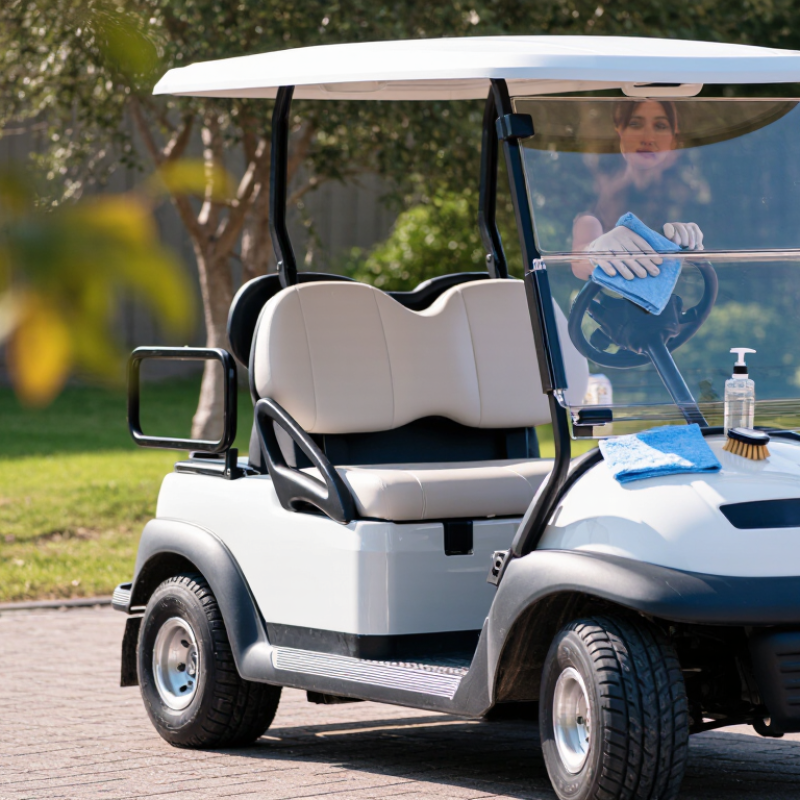
Top 10 Best Ways to Clean a Golf Cart?

Prepare the Golf Cart and Choose Safe Cleaning Supplies

Before cleaning, park the golf cart on level ground and remove the key. Let the motor, charger, and battery area cool completely.

The National Golf Foundation’s 2024 report recorded 47.2 million on-course golfers in the United States during 2023. That usage makes routine cart care more important, especially around handles, seats, and steering wheels.

Use a soft microfiber cloth, warm water, and a mild, labeled cleaner. Avoid strong solvents, abrasive powders, and untested degreasers. They can dull plastic, weaken seat surfaces, or damage dashboard markings. The U.S. Environmental Protection Agency’s Safer Choice program evaluates product ingredients for human health and environmental concerns. Choose products with clear directions and complete ingredient information. Never mix cleaning chemicals. Follow the stated contact time. CDC cleaning guidance also stresses cleaning visibly dirty surfaces before disinfecting them.

Tips:

Brush loose sand away first. Spray cleaner onto the cloth, not switches or vents. Use a separate damp cloth for the steering wheel. Keep water away from electrical connections. I sometimes use too much cleaner, which leaves a sticky film. Less product works better. Check the underside carefully; dried grass and mud often hide near the footwell. OSHA’s Hazard Communication Standard requires accessible chemical labels and safety information, so keep those instructions available during maintenance.

Remove Loose Dirt and Debris from Every Surface

Top 10 Best Ways to Clean a Golf Cart?

Remove Loose Dirt and Debris from Every Surface

Switch off the golf cart before cleaning. Remove keys and set the parking brake. Begin with a dry, soft-bristle brush. Sweep dust from the roof, seats, dashboard, and floor. Work from high surfaces downward. This prevents falling grit from covering areas you already cleaned. A small handheld vacuum can collect sand around seat seams and storage pockets.

Pay close attention to the footwell and wheel arches. Dirt often hides behind pedals, beneath floor mats, and under the seats. Use a narrow brush for these gaps. Lift loose leaves from the battery compartment without touching terminals or wiring. Low-pressure compressed air can clear stubborn particles, but keep it away from sensitive connections. I sometimes miss debris beneath the rear seat, so I inspect that area twice.

Use a microfiber cloth to gather fine dust from the steering wheel and control panel. Avoid shaking dirty cloths near the cart. That simply moves grit elsewhere. Do not begin with water, because wet dirt can become a paste in textured flooring. A dry pass is less dramatic, but it is usually more effective. Check the underside of the body and the tire treads before finishing. Loose stones there can later scratch nearby surfaces or mark clean flooring.

Wash the Body, Roof, Seats, and Wheels Step by Step

Top 10 Best Ways to Clean a Golf Cart

Park the golf cart on level ground, switch it off, and remove the key. I also keep the charger disconnected while cleaning. Rinse loose dust from the body with clean water, then use a mild soap and a soft mitt. Work from the roof downward, so dirty water does not run over clean panels. Avoid harsh powders and stiff brushes. They can dull painted or plastic surfaces. Rinse each section before the soap dries, then dry it with a clean microfiber towel. I once left water around a trim seam, and it created an annoying stain.

Clean the roof gently, including its underside and support joints. A soft brush helps lift dust from textured areas. Keep water away from switches, charging ports, and other electrical fittings. For the seats, wipe vinyl covers with diluted soap and a damp cloth. Use light pressure around stitching. Fabric seats need less water and more patience. Blot them rather than soaking the padding. Open storage compartments and let everything air-dry fully.

Wash the wheels last because they hold the heaviest road grime. Rinse brake dust and sand away before brushing. Use a separate soft brush for tires, wheel faces, and narrow gaps. Do not force water toward hubs or bearings. After rinsing, inspect the tread for stones and check whether the wheel area feels unusually hot or loose. Cleaning reveals problems, but it does not repair them. My process still needs improvement around tight wheel gaps, where grime often hides.

Top 10 Best Ways to Clean a Golf Cart

Estimated cleaning time by golf cart area, in minutes

A complete golf cart wash usually takes about 50–70 minutes, depending on dirt, stains, and drying time. Start with the body and roof, clean the seats and wheels separately, and avoid spraying water directly into electrical components.

Clean Battery Areas and Electrical Parts Without Causing Damage

Top 10 Best Ways to Clean a Golf Cart?

Battery areas need careful cleaning, not force. Remove the key, disconnect the charger, and park on a dry, level surface. Wear gloves and eye protection. For lead-acid batteries, keep the area ventilated and avoid touching your face during cleaning. Lithium batteries require different handling, so follow the vehicle’s service instructions.

Begin with a soft, dry brush to remove dust around terminals, cables, and the battery tray. Do not use a pressure washer. Never pour water over batteries, controllers, charging ports, or exposed wiring. Lightly dampen a microfiber cloth, then wipe plastic covers and nearby surfaces. Keep moisture away from vents and connector openings. For corrosion on lead-acid terminals, use an approved neutralizing solution sparingly. Do not let it enter the battery cells. Use an insulated tool, not a metal scraper.

Electrical parts deserve patience. Wipe connectors gently and allow every surface to dry completely before reconnecting power. Check for cracked insulation, loose cables, swelling, melted plastic, or unusual odors. Stop cleaning if you find damage. A qualified technician should inspect it.

I have seen carts look clean while hidden corrosion remained underneath. That is easy to miss.

I once focused too much on appearance and overlooked a loose cable. A clean surface does not prove a safe connection. Take photos before moving wires, and avoid forcing any connector that resists. Dryness matters more than shine.

Dry, Inspect, and Protect the Golf Cart After Cleaning

A clean golf cart is not truly ready until it is completely dry. Water left around electrical connections, seat seams, or metal joints can cause corrosion over time. I use a soft microfiber towel and press gently around switches, hinges, and the battery compartment. Rubbing too hard may push moisture deeper into narrow gaps.

Let the cart sit in a shaded, well-ventilated area for several minutes. Direct heat can damage plastic surfaces and dry rubber unevenly. I inspect the floor, wheel wells, underbody, and storage pockets with a flashlight. Look for trapped sand, loose fasteners, cracked wiring covers, or fresh fluid marks. Small problems are easier to notice when the cart is clean. I once missed moisture beneath a seat because I was rushing, and the area stayed damp longer than expected.

After drying, apply a suitable protective product only to approved exterior surfaces. Keep it away from pedals, steering grips, tires, brakes, and electrical contacts. A thin layer is enough. Excess residue attracts dust and can make controls slippery. Check the tire sidewalls and metal hardware for early wear, but do not hide damage with polish. Record unusual findings and arrange qualified service when electrical or structural parts need attention. Clean equipment can look safer than it is, so a careful inspection should never be skipped.

Top 10 Best Ways to Clean a Golf Cart? - Dry, Inspect, and Protect the Golf Cart After Cleaning

No. Cleaning Method Recommended Procedure Suitable Areas Suggested Frequency Drying, Inspection, and Protection
1 Remove Loose Dirt First Park the cart on a level surface, switch it off, remove personal items, and use a soft brush or microfiber cloth to clear sand, grass, and dust before adding water. Seats, floor, dashboard, body panels, and wheel wells Before every wash Check for loose trim, exposed wiring, cracked panels, or sharp debris. Removing dry dirt first helps reduce surface scratching.
2 Rinse with Low-Pressure Water Rinse from top to bottom with a gentle hose stream. Avoid directing water into electrical components, battery openings, motor areas, charging ports, and control switches. Exterior body, roof, wheels, and lower frame As needed after muddy or dusty use Inspect drainage points and confirm that no water is pooling around electrical connections or beneath the seats.
3 Wash with Mild Soap Solution Mix a small amount of mild, non-abrasive soap with clean water. Apply it using a soft sponge or microfiber mitt, working in small sections. Painted or molded body panels, roof, and bumpers Every 2–4 weeks, depending on use Rinse soap away completely so residue does not attract dust. Look for faded areas, stains, and damaged protective coatings.
4 Clean Seats and Upholstery Gently Vacuum loose debris, then wipe vinyl or synthetic upholstery with a damp cloth and mild soap. Use a soft brush only for textured surfaces. Seat cushions, backrests, and armrests Weekly or after spills Dry seats completely with a clean towel and allow ventilation. Inspect seams, fasteners, tears, mildew, and loose mounting hardware.
5 Scrub the Floor and Footwell Remove floor mats if present, brush away grit, and clean textured flooring with diluted soap and a soft-to-medium brush. Rinse lightly. Footwell, floorboard, pedals, and mats Weekly in wet or dusty conditions Dry the floor and mats separately. Check for standing water, loose pedals, damaged mats, and corrosion around fasteners.
6 Clean Wheels and Tires Rinse loose grit, apply mild soapy water, and scrub tires and wheel surfaces with separate brushes to prevent transferring abrasive dirt to painted panels. Tires, wheels, hubs, and wheel wells Monthly or after muddy trips Dry around wheel hardware and inspect tread, sidewalls, lug fasteners, and signs of uneven wear or cracks.
7 Detail the Dashboard and Controls Use a slightly damp microfiber cloth for the dashboard, steering wheel, switches, and display. Never spray liquid directly onto controls or instrument openings. Dashboard, steering wheel, gauges, and switches Weekly or when visibly dusty Dry immediately and test controls only after the area is dry. Check for cracked displays, sticky switches, and loose wiring covers.
8 Clean Battery and Charging Areas Carefully Disconnect charging equipment before cleaning. Keep water away from terminals and electrical connections; remove dust with a dry cloth and follow the vehicle manual for battery cleaning. Battery compartment and charging connection area Inspect monthly and after exposure to moisture Wear suitable eye and hand protection when required. Look for corrosion, damaged cables, loose terminals, leaks, or unusual odors before operation.
9 Dry the Cart Thoroughly Use clean microfiber towels to dry body panels, seats, seams, hinges, storage compartments, and hard-to-reach areas. Leave compartments open briefly for ventilation. Entire cart, especially seams and enclosed areas After every wet cleaning Do not store the cart while damp. Confirm that no moisture remains near electrical parts, under cushions, or inside storage spaces.
10 Protect and Perform a Final Inspection Apply only material-appropriate protectant to clean, dry exterior surfaces or vinyl when permitted by the care instructions. Avoid slippery products on steering wheels, pedals, and seats. Body finish, vinyl surfaces, hardware, and safety components After deep cleaning and before long-term storage Inspect lights, mirrors, brakes, tires, steering, fasteners, cables, and body damage. Store the cart in a dry, shaded, well-ventilated location with appropriate cover protection.

Safety note: Always follow the golf cart owner's manual, disconnect charging equipment before cleaning, and avoid high-pressure water around batteries, motors, controllers, connectors, switches, and other electrical components.

FAQS

How should I prepare a golf cart before cleaning it?

Park on level ground, switch it off, remove the key, and disconnect the charger. Keep the surface dry.

What cleaning method protects the body and roof?

Rinse loose dust with clean water. Use mild soap and a soft mitt, working from the roof downward. Avoid harsh powders and stiff brushes.

How can I clean roof joints and electrical areas safely?

Clean the roof underside and support joints with a soft brush. Keep water away from switches, charging ports, and fittings.

What is the safest way to clean golf cart seats?

Wipe vinyl seats with diluted soap and a damp cloth. Use light pressure near stitching. Blot fabric seats instead of soaking them.

How should I clean the wheels and tires?

Wash wheels last. Rinse away sand and brake dust before brushing. Use a separate soft brush for tires, wheel faces, and narrow gaps.

What should I check after cleaning the wheels?

Inspect the tread for stones. Notice unusual heat, looseness, or hidden grime around the wheel area. Cleaning does not repair faults.

How do I clean battery areas without causing damage?

Remove the key and charger. Wear gloves and eye protection. Use a soft, dry brush first. Never use a pressure washer.

Can I pour water over batteries or exposed wiring?

No. Lightly dampen a microfiber cloth for nearby surfaces. Keep moisture away from vents, terminals, connectors, and exposed wiring.

How should I handle battery corrosion?

Use an approved neutralizing solution sparingly on suitable lead-acid terminals. Keep it out of battery cells. Use insulated tools, not metal scrapers.

What signs mean I should stop cleaning and seek help?

Stop if you find cracked insulation, loose cables, swelling, melted plastic, or unusual odors. A qualified technician should inspect the cart.

How do I prevent stains and moisture problems after washing?

Rinse soap before it dries, then use a clean microfiber towel. Open storage compartments and let everything air-dry completely. Dryness matters more than shine.

What cleaning mistake is easy to overlook?

Hidden corrosion can remain under clean surfaces. I once missed a loose cable. Take photos before moving wires, and avoid forcing connectors.

Conclusion

Keeping a golf cart clean is easier and safer when the process is organized from start to finish. What is the best way to clean a golf cart? Begin by parking it in a shaded, well-ventilated area, removing personal items, and choosing mild cleaning supplies that will not harm painted surfaces, plastic, upholstery, or metal. Brush or blow away loose dirt, leaves, sand, and debris before adding water. Then wash the body and roof with gentle soapy water, clean the seats carefully, and scrub the wheels and tires with suitable tools.

Extra caution is needed around the battery compartment and electrical parts. Avoid soaking connections, vents, and wiring; use a slightly damp cloth or soft brush instead. After washing, rinse away residue, dry every surface thoroughly, and inspect for stains, corrosion, loose parts, or trapped moisture. Applying a suitable protective treatment to clean surfaces can help reduce future dirt buildup and keep the golf cart looking and operating properly.

Ethan

Ethan

Ethan is a seasoned marketing professional with a deep expertise in our company's innovative product line. With a passion for sharing knowledge and insights, he takes the lead in regularly updating our corporate blog, where he explores industry trends, product features, and effective marketing......