When considering how to choose between electric and gas golf carts, it's essential to evaluate your specific needs. Each option has distinct advantages and disadvantages that can greatly impact your experience on the course. Electric golf carts often offer quiet operation and reduced maintenance costs. However, they may require regular charging, which can limit their range.
In contrast, gas golf carts provide more power and longer ranges, but they can be noisier and produce emissions. This choice heavily relies on your intended usage. For instance, if you play frequently on hilly terrains, a gas cart might fare better. But for leisurely drives around a flat community, an electric cart could be ideal.
Ultimately, your selection should reflect personal preferences and practical considerations. Weighing the pros and cons is essential. Think about what matters most to you, whether it’s environmental impact or performance. Making an informed decision will lead to a more enjoyable golf experience.
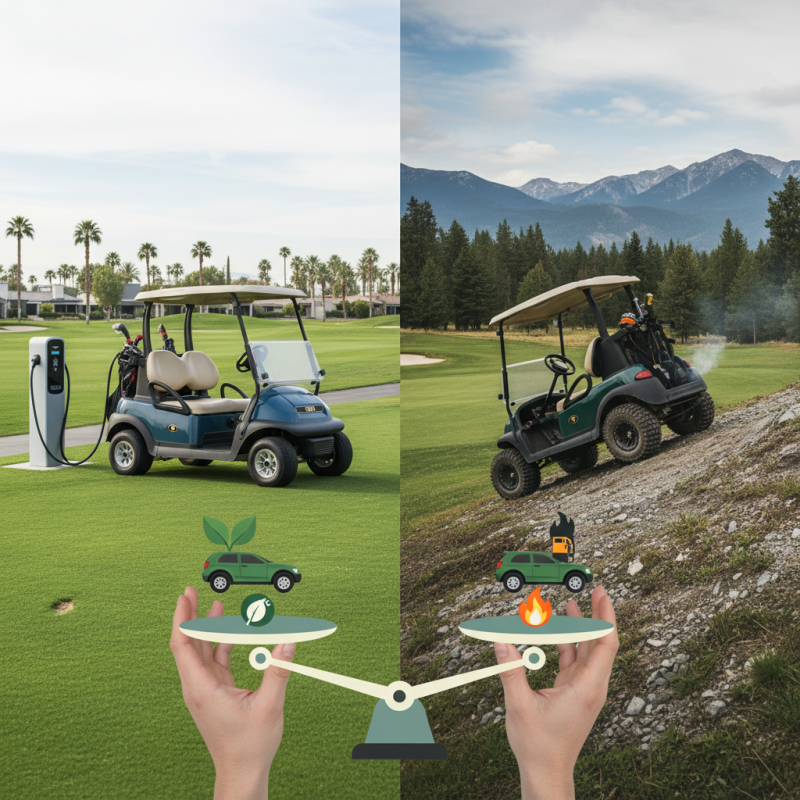
Understanding the Key Differences Between Electric and Gas Golf Carts
When considering an electric or gas golf cart, several differences come into play. Electric carts rely on batteries for power. They are often quieter and produce no emissions. This makes them ideal for residential communities or golf courses. However, battery lifespan can vary. You may need to replace batteries every few years, which can add to the overall cost.
Gas golf carts, on the other hand, use a combustion engine. They can cover longer distances without needing to recharge. This is beneficial for larger courses or rugged terrains. Yet, gas carts emit noise and pollutants. Maintenance for gas engines can also be more involved. The trade-off is something to ponder.
**Tips:** Think about your primary usage. For short, quiet rides, electric is suitable. For longer trips, gas may be better. Additionally, consider maintenance time. Electric carts need charging but are easier to upkeep. Check local regulations. Some places restrict gas carts due to emissions. Balancing these factors will help you choose the right option for your needs.
Comparison of Electric vs Gas Golf Carts
The chart above compares key metrics for electric and gas golf carts, including initial cost, annual maintenance cost, range per charge/tank, top speed, and weight. This information can help you decide which type of golf cart best suits your needs.
Evaluating Performance: Speed, Range, and Power Options
When choosing between electric and gas golf carts, performance metrics play a crucial role. Speed, range, and power options are essential for making an informed decision. Electric golf carts typically offer quiet operation and smooth acceleration. They can reach speeds up to 20-25 mph. However, gas carts often provide more power for hilly terrains.
Consider your usage patterns. If you plan short trips on flat courses, electric carts might suffice. Ideally, check the claimed range before purchase. Many electric options may not meet expectations under heavy usage. In contrast, gas carts excel in longer distances. They can cover more ground without frequent refueling.
Tips: Regular maintenance impacts performance. For electric models, inspect the battery health. For gas carts, ensure the engine is tuned up. Also, think about recharge time and availability of nearby charging stations. If you often play on different courses, this could affect your experience. Balancing power needs with convenience is key. Choose what aligns best with your golfing lifestyle.
Cost Analysis: Purchase Price, Maintenance, and Fuel Expenses
When considering electric versus gas golf carts, it's crucial to assess the long-term costs involved. The initial purchase price for electric models can be higher. A study by the National Golf Cart Association shows electric carts typically range from $8,000 to $10,000. In contrast, gas carts usually start around $5,000 and can go up. This price gap can deter budget-conscious buyers. However, upfront costs don’t tell the whole story.
Maintenance expenses differ considerably. Electric carts generally require less maintenance. They often need simple battery checks and tire rotations. Gas carts, however, demand regular oil changes, engine repairs, and fuel system maintenance. Industry reports suggest that annual maintenance costs for gas carts can exceed $600, while electric carts average around $300. Fuel expenses also play a role. Electricity costs about $0.12 per kWh on average. This translates to around $1.50 per full charge, providing a significant advantage over gas, which fluctuates widely but averages around $3 per gallon.
These factors often sway buyers toward electric options, despite higher prices. Yet, the longevity of electric batteries can lead to replacement costs – often over $1,000 after a few years. This presents a dilemma for some buyers. Understanding these nuances is vital when choosing the right golf cart type for your needs.
Environmental Impact: Emissions and Sustainability Considerations
When considering the environmental impact of electric versus gas golf carts, emissions are a critical factor. Electric carts produce zero tailpipe emissions, significantly reducing air pollutants in local environments. A 2021 report from the International Council on Clean Transportation highlighted that electric vehicles can cut greenhouse gas emissions by up to 50% compared to traditional gasoline models. This statistic emphasizes the clear advantage of electric options for eco-conscious users.
However, it's essential to address the full lifecycle emissions associated with both types of carts. While electric models eliminate onsite emissions, the production of their batteries can generate substantial carbon footprints. The process of mining lithium and other critical materials often results in environmental degradation. According to a 2020 study by the U.S. Department of Energy, battery manufacturing can contribute as much as 50% of an electric vehicle’s total lifecycle emissions.
Beyond emissions, the sustainability of powering these carts must be assessed. Electric golf carts rely on the electricity grid, which may still depend on fossil fuels. Reports indicate that only about 20% of global electricity comes from renewable sources. This reliance on fossil fuels may dilute the environmental benefits of electric carts. Users should consider these hidden impacts when determining the best option for sustainable golf cart use.
Choosing Electric or Gas Golf Cart for Your Needs? - Environmental Impact: Emissions and Sustainability Considerations
| Golf Cart Type |
Emissions (grams CO2/km) |
Fuel Efficiency (miles per gallon) |
Battery Life (Years) |
Range per Charge/Fuel Tank (miles) |
Sustainability Rating |
| Electric |
0 |
N/A |
5-7 |
30-50 |
Excellent |
| Gas |
500-1200 |
25-30 |
N/A |
120-200 |
Moderate |
Choosing Based on Usage: Recreational vs. Commercial Applications
Choosing the right golf cart depends heavily on how you plan to use it. For recreational needs, an electric golf cart offers a quiet, eco-friendly option. It’s perfect for leisurely rides on the golf course or around a community. These carts typically have a lower operating cost and are easier to maintain. However, they might struggle with longer distances and steep terrains.
Commercial applications may require a different approach. Gas golf carts often shine in this area. They possess more power and can handle heavier loads. Ideal for maintenance teams or shuttle services, these carts can operate for longer periods without needing a recharge. It’s crucial to consider the specific demands of your work environment when choosing between electric and gas options.
Tips: When selecting a cart, think about the terrain you'll drive on. If it's hilly, gas might be better. For short, flat activities, electric should suffice. Also, evaluate how often you’ll use the cart. For regular use in a bustling environment, durability and fuel efficiency should be top priorities. Always assess your needs before making a final choice.
FAQS
: Electric models are typically priced between $8,000 and $10,000. Gas carts start around $5,000.
Electric carts average $300 annually, while gas carts can exceed $600 for maintenance costs.
Electricity costs about $0.12 per kWh, or $1.50 per full charge. Gas averages around $3 per gallon.
Despite higher prices, electric carts have lower operating costs and require less maintenance.
Electric carts may struggle with long distances and steep terrains.
Gas carts offer more power, handle heavier loads, and require less frequent recharging.
For hilly terrains, gas carts may perform better. Electric carts are suitable for flat areas.
Regular use in busy areas needs durable and fuel-efficient carts. Consider your specific needs.
Yes, battery replacements can cost over $1,000 after a few years, adding to ongoing expenses.
Assessing your intended use is crucial. Personal preferences and demands greatly affect the decision.
Conclusion
When considering how to choose between electric and gas golf carts, it’s essential to understand the key differences that influence performance, costs, and environmental impact. Electric carts typically offer quieter operation and lower emissions, making them a more sustainable option, while gas carts generally provide greater speed and range, suited for more extensive uses. Evaluating factors such as speed, range, and power options will help you determine which type aligns with your specific needs.
Additionally, a comprehensive cost analysis that examines purchase price, maintenance, and fuel expenses is crucial for making an informed decision. Whether for recreational use or commercial applications, understanding your intended usage will guide you to the right choice between electric and gas options. Each type presents unique advantages, so weighing these factors can lead you to the most suitable golf cart for your requirements.

 E-par Golf Cart