Choosing the right battery for golf carts is essential. Many users often ask, "Why is lithium battery better for golf carts?" Experts like Dr. Henry Stone, a leading researcher in battery technology, emphasize the advantages of lithium batteries. He states, “Lithium batteries offer unmatched performance and longevity for electric vehicles, including golf carts.”
Lithium batteries are lighter than traditional lead-acid alternatives. This weight reduction improves speed and maneuverability on the course. Additionally, lithium batteries charge faster and last longer. Users can play multiple rounds without worrying about running out of power. The efficiency gained is significant for avid golfers.
However, lithium batteries come with a higher initial cost. Some may hesitate due to this upfront investment. Despite this, the long-term savings in maintenance and replacement make them a wise choice. A deeper understanding of these benefits can enhance any golfer's experience on the green. Adopting lithium technology could revolutionize your game.
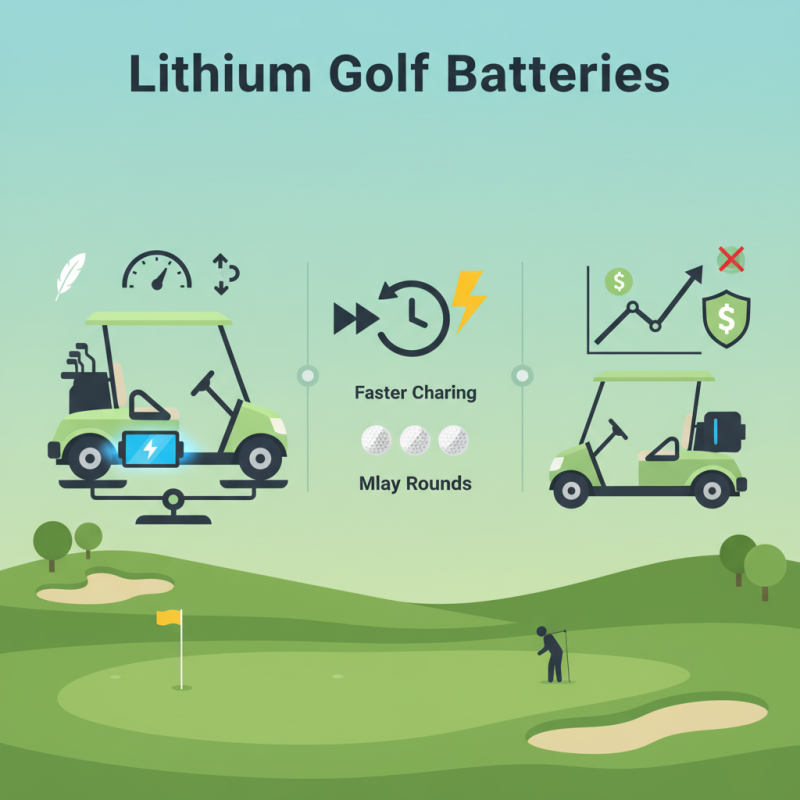
Advantages of Lithium Batteries in Golf Carts Compared to Lead-Acid
Lithium batteries offer significant advantages for golf carts compared to traditional lead-acid batteries. These advantages stem from their superior energy density. A lithium battery holds three to five times more energy than a lead-acid battery of the same weight. This means lighter carts, potentially enhancing performance and maneuverability on the golf course.
Longevity is another key factor. Lithium batteries often last up to 10 years, while lead-acid batteries typically only endure 3 to 5 years at best. This longevity can translate into lower total costs over time. A study from the Battery University indicates that these batteries have a cycle life of 2,000 to 7,000 cycles, far surpassing lead-acid options.
Furthermore, lithium batteries charge faster. They can reach full charge in a matter of hours compared to the lengthy charging times of lead-acid batteries. This is particularly important for busy golf courses where downtime needs to be minimized. However, it’s crucial to consider that lithium batteries can require a more sophisticated charging system, presenting a challenge for some cart operators. Overall, while lithium batteries have many clear advantages, they necessitate a careful assessment of infrastructure and cost implications.
Why Choose Lithium Batteries for Golf Carts Over Others?
| Feature |
Lithium Batteries |
Lead-Acid Batteries |
| Weight |
Up to 60% lighter |
Heavier |
| Lifespan |
Up to 10 years or more |
3-5 years |
| Charging Time |
1-3 hours |
8-12 hours |
| Depth of Discharge |
80-100% |
50% |
| Maintenance |
No maintenance required |
Regular maintenance needed |
| Environmental Impact |
Less toxic materials |
More toxic materials |
Performance Benefits of Lithium Batteries for Golf Cart Efficiency
Lithium batteries are becoming the preferred choice for golf carts due to their impressive performance benefits. One key advantage is their lightweight design. This feature allows for better maneuverability and reduced energy consumption. Golf carts equipped with lithium batteries can travel longer distances on a single charge. Many users report better efficiency compared to traditional lead-acid batteries.
Another significant benefit is the quick charging capability. Lithium batteries can charge up to five times faster. This means less downtime on the course. Users can get back to playing sooner. However, it’s essential to consider the initial cost. While upfront costs are higher, the long-term savings on maintenance and replacement are noteworthy. Lithium batteries often last longer, requiring fewer replacements over time.
Overall, the reliability of lithium batteries stands out. They maintain a consistent power output, even when the charge is low. This feature can prevent unexpected performance drops during a round of golf. Golfers enjoy a smoother experience. Yet, it is crucial to ensure proper battery management and charging practices for optimal performance. Neglecting these aspects could lead to problems, making it important to educate users on best practices.
Longevity and Durability of Lithium Batteries in Golf Cart Applications
Lithium batteries have become a popular choice for golf carts due to their impressive longevity and durability. Industry reports show that lithium batteries can last up to 10 years or more. In contrast, traditional lead-acid batteries typically offer 3 to 5 years of service. This extended lifespan translates to fewer replacements and reduced costs over time.
Beyond longevity, lithium batteries excel in terms of performance. They provide consistent power output, enabling golf carts to maintain speed and efficiency. Furthermore, lithium batteries are lighter than their lead-acid counterparts. This weight advantage enhances the golf cart’s maneuverability. Having less weight also leads to reduced energy consumption.
However, it's essential to acknowledge that lithium batteries can have a higher upfront cost. Many consumers might hesitate due to this initial investment. Yet, the long-term savings on replacement and maintenance often offset these concerns. As organizations increasingly adopt lithium technology, ongoing advancements in battery management systems promise even greater reliability.
Cost-Effectiveness: Analyzing Lithium Battery Lifespan and Maintenance
Lithium batteries stand out in the golf cart industry for several reasons, particularly regarding
lifespan and maintenance. Compared to traditional lead-acid batteries, lithium options can last significantly longer. Research suggests that lithium batteries can provide around 2,000 to 5,000 charge cycles. This lifespan is about three times that of lead-acid batteries. Golf cart owners enjoy better value over time.
Maintenance is another crucial factor. Lithium batteries generally require less upkeep. Unlike lead-acid batteries, no periodic watering or equalizing charges are needed. This means fewer maintenance hours, leading to cost savings. Additionally, lithium batteries remain more efficient over their lifespan. Their ability to hold charge decreases at a much slower rate.
However, buyers should consider the initial investment. Lithium batteries tend to cost more upfront. This can deter some golf cart owners. Yet, evaluating long-term costs makes the investment worthwhile. The savings on maintenance and replacement can offset the higher price. Reflection on these factors may sway decisions towards lithium batteries as a preferred choice.
Environmental Impact of Lithium Batteries Versus Conventional Options
The environmental impact of lithium batteries is increasingly favorable compared to conventional options. Traditional lead-acid batteries, commonly used in golf carts, contain harmful materials. When disposed of improperly, they can leach toxic chemicals into the soil and water. This pollution is a serious concern, especially in areas where golf carts are frequently used.
Lithium batteries, however, offer a cleaner alternative. They have a longer lifespan, meaning fewer batteries end up in landfills. While the production process for lithium batteries has environmental costs, advancements are reducing these impacts. Innovations in recycling methods are also emerging, allowing for the recovery of valuable materials. Still, we must consider the lithium extraction process, which can affect local ecosystems. Responsible sourcing is crucial.
Using lithium batteries helps reduce overall waste and pollution. They charge faster, saving time and reducing energy consumption. Moreover, the performance in terms of range and efficiency is significantly better. However, not all users may be aware of these benefits. Education on lithium batteries' advantages is needed to encourage wider adoption. The transition to lithium is positive, but awareness and responsibility are key components for sustainable use.
Why Choose Lithium Batteries for Golf Carts Over Others?
This chart illustrates the environmental impact scores of different types of batteries used in golf carts. Lithium batteries score lower on the environmental impact scale compared to conventional options such as lead-acid and nickel-cadmium batteries, making them a more environmentally friendly choice.
FAQS
: Lithium batteries can last up to 10 years or more.
Lithium batteries typically last 3 to 5 years longer than lead-acid batteries.
They provide consistent power output, maintaining speed and efficiency.
Yes, lithium batteries are lighter, improving maneuverability and reducing energy consumption.
Lithium batteries usually have a higher upfront cost, which can deter buyers.
They require less upkeep, with no periodic watering or equalizing charges needed.
Lithium batteries can provide around 2,000 to 5,000 charge cycles.
Yes, long-term savings on maintenance and replacements often offset initial costs.
The higher upfront investment might not appeal to all consumers.
Their ability to hold charge decreases at a much slower rate than lead-acid batteries.
Conclusion
Lithium batteries are increasingly favored for golf carts due to their numerous advantages over traditional lead-acid batteries. One primary reason why lithium battery is better for golf carts lies in their superior performance and efficiency. They provide consistent power output, enhancing the overall driving experience and extending the operational range of the cart. Additionally, lithium batteries boast impressive longevity and durability, often lasting significantly longer than lead-acid types, which translates to reduced replacement frequency and lower long-term costs.
Moreover, when analyzing the cost-effectiveness of lithium batteries, it is clear that their extended lifespan and minimal maintenance requirements further contribute to financial savings. Environmentally, lithium batteries offer a cleaner alternative, reducing harmful waste and promoting sustainable practices compared to conventional options. Overall, the combination of performance, durability, cost-effectiveness, and environmental benefits underscores why lithium batteries are the preferred choice for golf carts today.

 E-par Golf Cart