Why is charging correctly important for golf carts? The answer reaches beyond a full battery. Correct charging protects battery capacity, driving range, and the cart’s electrical system. It also supports safer daily operation, especially in fleets, resorts, and busy residential communities.
Jim McMann, a golf-cart charging specialist and former Director of Engineering at Lester Electrical, has stated, “The charger is an important part of the golf cart’s battery system.” His point is practical. A charger must match the battery type, voltage, and charging profile. Using the wrong charger can cause overheating, incomplete charging, or unnecessary battery wear. A cart may still move, but its performance can quietly decline.
Small habits matter. Let the charger complete its cycle. Keep charging connections clean and dry. Inspect frayed cables, loose plugs, and unusual heat. Lithium batteries require different controls than traditional flooded lead-acid batteries. Mixing systems is not a clever shortcut.
Not every charging problem is obvious. A cart that loses power halfway through a round may reflect poor charging habits, aging batteries, or a failing charger. That uncertainty deserves attention. Checking the manufacturer’s manual and obtaining professional testing can prevent guesswork.
There is no perfect routine for every cart. Charging conditions, battery age, temperature, and usage all influence results. Still, correct charging remains one of the simplest ways to improve reliability and extend battery service life. More importantly, it helps owners notice problems before a quiet electrical issue becomes an expensive repair.
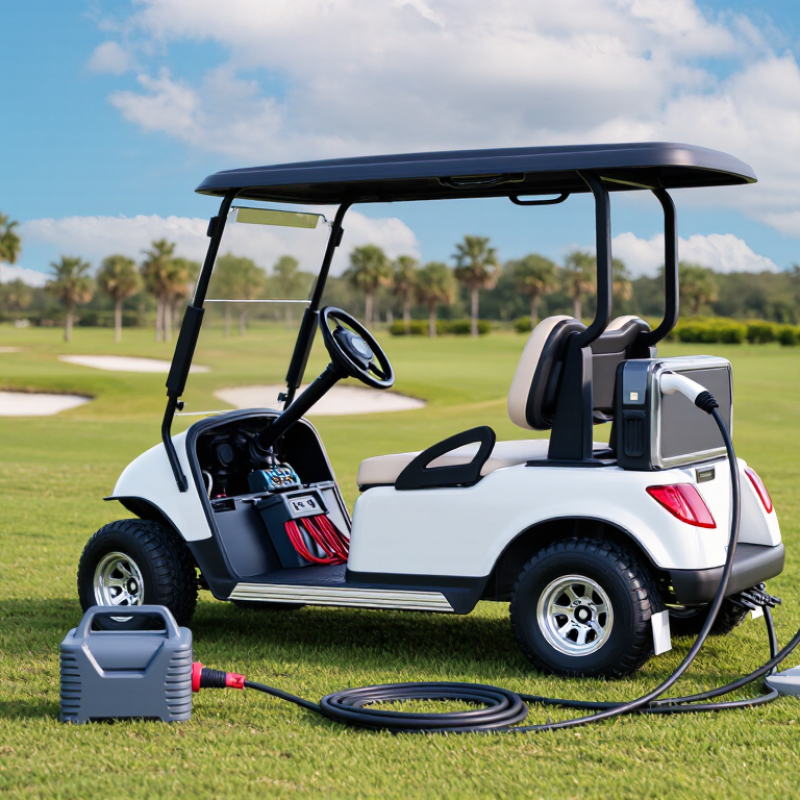
A golf cart charging system converts household AC power into controlled DC energy for the battery pack. The charger first checks voltage, temperature, and battery condition. It then adjusts current through bulk, absorption, and maintenance stages. Lead-acid batteries usually need regular full charging, while lithium batteries depend on electronic protection and battery-management systems.
Charging efficiency matters because lost energy becomes heat. The U.S. Department of Energy’s Energy Storage Grand Challenge Roadmap reports approximately 85–95% round-trip efficiency for many lithium-ion storage systems. Actual golf cart performance varies. Battery age, cable resistance, temperature, and charger calibration can reduce that figure. A damaged connector may feel warm during charging. That detail should not be ignored. In my experience, owners often blame the battery before checking airflow, terminals, and charging profiles. The assumption is understandable, but sometimes wrong.
Tips: Use a charger matched to the pack’s voltage and chemistry. Keep vents clear and connections clean. Do not interrupt lead-acid charging repeatedly, because incomplete cycles can encourage sulfation. For lithium packs, follow the battery-management system’s instructions and avoid unapproved chargers. The National Renewable Energy Laboratory notes that temperature strongly affects battery performance and aging. Therefore, charge in a dry, moderate-temperature area. No routine is perfect. A simple monthly inspection can still reveal swelling, corrosion, loose cables, or unusual heat before they become expensive problems.
Charging a golf cart correctly protects battery life, driving range, and personal safety. I have seen carts lose power early because owners stopped charging after short trips. A proper routine begins with the correct charger for the battery type. Lead-acid and lithium batteries require different charging controls.
Park on a level, dry surface with good airflow. Turn off the cart and remove the key. Check the battery case, cables, and terminals for cracks, loose connections, or corrosion. Do not charge damaged batteries. Wear eye protection, and keep sparks, flames, and cigarettes away. Clean, dry connections help prevent heat buildup.
Connect the charger according to the vehicle and charger manuals. Many systems require the plug to connect to the cart before the wall outlet. Confirm that the indicator shows charging. The charger should remain stable, without burning smells, unusual heat, or repeated clicking. Let the cycle finish fully. Stopping too early can reduce usable range, although some modern lithium systems manage charging differently. Do not assume every cart follows the same pattern.
When charging ends, switch off the wall supply if required. Then disconnect the charger from the cart. Store the cable dry and away from traffic. For flooded lead-acid batteries, inspect electrolyte levels only as the manual allows, and add distilled water after charging when appropriate. I sometimes forget that “fully charged” does not mean “maintenance-free.” Keep a simple charging log. It can reveal declining performance before a small battery problem becomes an expensive failure.
Correct charging helps a golf-cart battery reach a full charge without unnecessary overheating, undercharging, or overcharging. The chart shows a typical three-stage charging profile for a 48-volt lead-acid golf-cart battery system. Actual values vary by battery condition and charger design.
During the bulk stage, the charger supplies most of the charging energy. The absorption stage gradually reduces current as the battery approaches full charge, while the float stage maintains the charge at a lower level. Following the correct sequence improves charging efficiency and helps reduce battery wear.
Proper charging protects battery capacity, which directly affects driving range. A battery that receives the correct voltage can store energy more efficiently. An incorrectly matched charger may cause overheating, incomplete charging, or premature wear.
Recharge the cart after each substantial trip, especially when the meter shows a low level. Lead-acid batteries usually perform better when they are fully recharged instead of repeatedly left partly charged. Lithium batteries need the correct charging profile and should not be treated like older battery types. Never guess the setting.
Small details matter. Keep the charging area dry and well ventilated. Check cables for cracks, loose connections, or unusual heat. For flooded lead-acid batteries, inspect the fluid level regularly and use distilled water when required. Add water after charging, not before. Clean corrosion from terminals carefully. It can increase electrical resistance.
Heavy loads, steep hills, and cold weather reduce distance. I have seen owners blame the battery when underinflated tires caused much of the problem. I once assumed a longer charging time meant a healthier battery; that was not always true. A compatible automatic charger should complete its cycle without forcing extra hours. Record charging behavior, range, and battery age. These simple notes can reveal gradual capacity loss before the cart suddenly stops far from home.
A golf cart can look ready while its battery quietly loses capacity. Incorrect charging often starts with a mismatched charger, a loose connector, or a cycle stopped too early. Small mistakes matter. Undercharging leaves sulfate buildup on lead-acid plates, reducing travel distance and increasing voltage drop on hills. Overcharging creates heat, dries electrolyte, and may shorten battery life. Lithium batteries can also suffer when charged with incompatible equipment or outside the approved temperature range.
The warning signs are often quiet. The charger may run unusually hot, the battery case may swell, or a sharp chemical smell may appear near the compartment. Stop charging if cables feel damaged, terminals are corroded, or moisture is present. Keep the cart in a dry, ventilated area, and never cover a hot charger. For flooded batteries, inspect electrolyte levels and use distilled water according to the battery maker’s instructions. Do not guess.
My own early mistake was treating every battery type the same. That assumption was expensive. A qualified technician can test resting voltage, charging voltage, and individual battery performance. These checks reveal problems that a dashboard gauge may miss. Follow the charger’s timing and connection sequence, and avoid repeatedly interrupting a normal charge. A fully charged battery is not always a healthy battery. It may only be hiding a weak cell.
| Charging Practice or Mistake | What May Happen | Why It Matters | Safer Charging Approach |
|---|---|---|---|
| Using a charger that does not match the battery chemistry or pack voltage | The battery may charge poorly, fail to reach its intended charge level, or be exposed to an unsuitable charging profile. | Lead-acid and lithium batteries use different charging requirements. A cart’s nominal pack voltage alone does not confirm charger compatibility. | Check the battery manufacturer’s specifications and use a charger designed for the battery chemistry and complete pack. |
| Repeatedly stopping a charge before it is complete | Some lead-acid batteries may remain undercharged, which can contribute to sulfation and reduced usable capacity over time. | Regular incomplete charging can shorten battery life and reduce the cart’s driving range. | Allow the correct charger to complete its cycle when practical. Follow the battery maker’s guidance for lithium batteries and partial charging. |
| Leaving a battery on charge with a charger that does not regulate or stop charging properly | Overcharging can cause excessive heat and, for flooded lead-acid batteries, increased water loss and gas production. | Excess heat and electrolyte loss can damage batteries and create avoidable safety risks. | Use a compatible automatic charger with appropriate charging controls. Do not use a damaged charger or ignore unusual heat, odor, or noise. |
| Charging in a poorly ventilated area | Charging gases from lead-acid batteries may accumulate, particularly during charging or if a battery is faulty. | Hydrogen gas can ignite if exposed to sparks or flames. | Charge in a well-ventilated area, keep flames and sparks away, and follow the battery and charger safety instructions. |
| Ignoring water levels in flooded lead-acid batteries | Exposed plates can be damaged, while overfilling can cause electrolyte to spill during charging. | Incorrect electrolyte levels can reduce battery performance and contribute to corrosion or permanent damage. | Check levels according to the battery instructions. Use distilled water when needed, and add it at the recommended point in the maintenance process. |
| Charging or storing batteries in very hot or very cold conditions | Extreme temperatures can slow charging, reduce performance, or damage a battery; some lithium batteries restrict charging when too cold. | Temperature limits differ by battery type and model. | Follow the battery’s specified temperature range. Let the battery move into an approved temperature range before charging if required. |
| Leaving a cart unused for a long period without checking its charge | Parasitic electrical loads or self-discharge may gradually lower the battery’s state of charge. | A deeply discharged battery may be difficult to recover and can suffer lasting capacity loss, depending on its chemistry. | Follow the manufacturer’s storage instructions and check charge periodically. Use a maintenance charger only if it is approved for the battery. |
| Charging with damaged cables, loose connections, or a wet charging area | Connections may heat up, charging may become unreliable, or electrical shock and fire hazards may increase. | Damaged equipment and moisture can compromise electrical safety. | Inspect cables and connectors before use. Keep the charging area dry, and have damaged components repaired or replaced by a qualified technician. |
Important: Charging requirements vary by battery type and model. Always follow the instructions supplied with the golf cart, battery, and charger.
Safe charging protects the battery, charger, and people nearby. A practical lesson is simple: heat, moisture, and poor connections create avoidable trouble. Lead-acid batteries can release hydrogen during charging, especially in poorly ventilated rooms. Lithium batteries can become dangerous when damaged, swollen, or charged with an incorrect profile. Never charge a visibly damaged battery.
The National Fire Protection Association recorded about 1.5 million fires in the United States during 2022. That figure covers many causes, not golf carts alone, but it shows why electrical precautions matter. Use the charger designed for the cart’s battery voltage. Inspect the plug, cable, and connector before every cycle. Keep the charger on a dry, nonflammable surface. Do not cover it with clothing or store paper nearby. A hot connector deserves attention, not optimism.
Tips: Charge in a ventilated area, away from sparks and flames. Keep children away from cables. Stop charging if you notice unusual heat, odor, smoke, swelling, or crackling. Let the equipment cool before touching it. Avoid extension cords unless the charging instructions specifically allow them. No checklist is perfect. A tired operator can still miss a warm plug, so checking by hand can help, carefully. The U.S. Consumer Product Safety Commission regularly warns consumers about hazards from damaged or improperly charged batteries, reinforcing the value of routine inspection.
It converts household AC power into controlled DC energy for the battery pack. The charger checks voltage, temperature, and battery condition. It then adjusts current through bulk, absorption, and maintenance stages.
Different batteries need different charging profiles. Lead-acid batteries usually need regular full charging. Lithium batteries require electronic protection and compatible management systems. Using the wrong charger can create heat, swelling, or capacity loss.
Lead-acid batteries may develop sulfate buildup on their plates. Travel distance can decrease. Voltage may also drop quickly on hills. Small mistakes matter. Repeated interruptions can make the problem worse.
Stop charging if you notice smoke, swelling, crackling, sharp odors, or unusual heat. A warm connector deserves attention. Damaged cables, corrosion, and moisture also require immediate inspection.
Choose a dry, well-ventilated area with a nonflammable surface. Keep paper, clothing, sparks, and flames away. Lead-acid batteries can release hydrogen during charging. Never cover a hot charger.
Extreme temperatures can reduce performance and accelerate aging. Charge in a moderate, dry location. Let hot equipment cool before touching it. This detail is easy to forget.
Check the plug, cable, connector, terminals, and battery case. Look for corrosion, looseness, cracks, swelling, or moisture. Keep vents clear. Do not guess.
Yes. A weak cell may hide behind a normal dashboard reading. A technician can test resting voltage, charging voltage, and individual battery performance. I once assumed the battery was fine because the gauge looked full. That assumption can be expensive.
Why is charging correctly important for golf carts? A golf cart’s charging system and batteries work together to store and deliver energy for reliable movement. Following the proper charging process—checking connections, using the correct charger, allowing the cycle to finish, and unplugging safely—helps maintain consistent performance. Regular and complete charging can extend battery life, improve driving range, and reduce unexpected power loss during use.
Incorrect charging may cause incomplete charging, overheating, reduced capacity, or unnecessary wear on the battery and charging equipment. In some cases, poor practices can also create sparks, damage electrical components, or increase safety risks. By charging in a clean, dry, and well-ventilated area, inspecting cables and plugs, and following the cart’s operating instructions, owners can protect the system, reduce maintenance needs, and enjoy safer, more dependable performance over time.

E-par Golf Cart