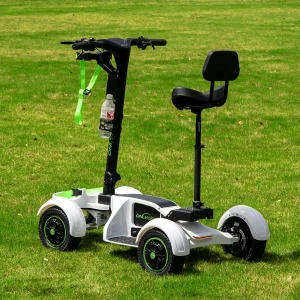
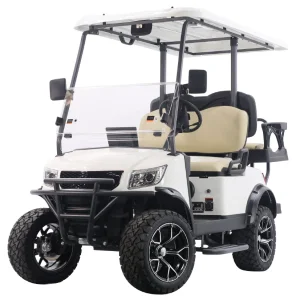
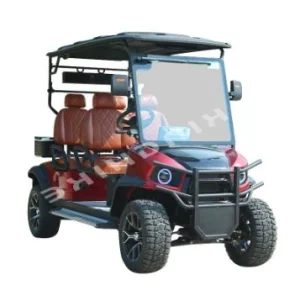
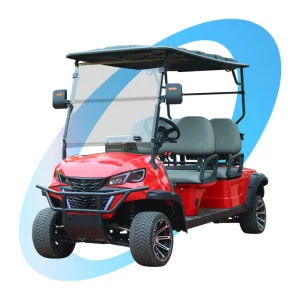
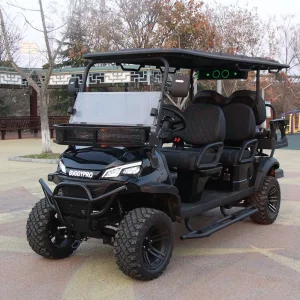
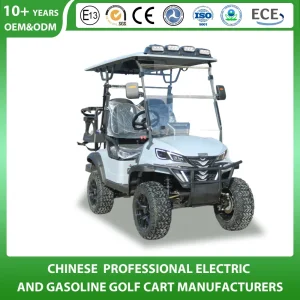
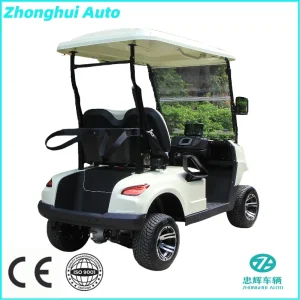
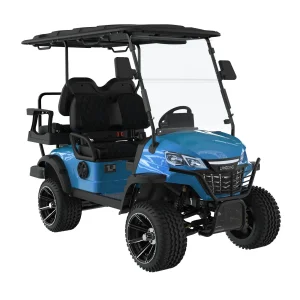
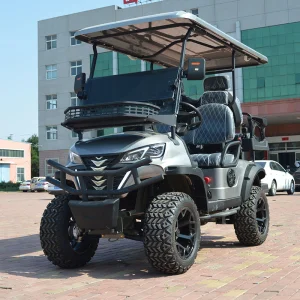
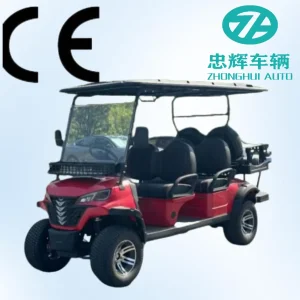
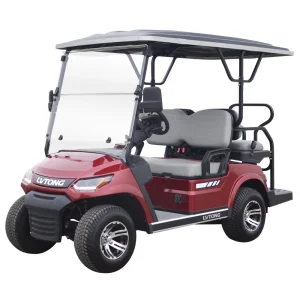
The global landscape for commercial micro-mobility and closed-campus logistics is undergoing an architectural paradigm shift. Industrial operations, expansive luxury resorts, and eco-conscious master-planned communities are rapidly decommissioning high-emission combustion support vehicles in favor of sophisticated low-speed electric vehicles (LSEVs). As a primary structural node in this evolution, the 2-seater electric scooter and multi-wheeled utility cart configuration represent the optimal intersection of spatial efficiency, payload optimization, and structural agility. Far beyond simple adaptations of recreational platforms, modern 2-seater multi-wheeled vehicles are purpose-engineered assets designed to survive heavy, multi-shift deployment profiles while maintaining absolute operational reliability.
For enterprise procurement officers, commercial fleet operators, and global import-export distributors, mapping the long-term utility of an LSEV requires evaluating critical material variables. This includes examining structural chassis engineering, thermal runaway risk profiles of integrated battery management modules, and the adaptive programming parameters of core speed controllers. Our engineering ecosystems are structured to specifically address these core execution vulnerabilities. We provide scalable OEM and ODM platforms that match strict western compliance frameworks (such as CE, DOT, and EEC protocols) with high-efficiency, specialized production mechanics.
Global procurement strategies for low-speed 2-seater fleets frequently struggle with structural vulnerabilities that emerge within 18 to 36 months of deployment. Standard off-the-shelf recreational models often fail under the demands of continuous commercial operations. B2B purchasing agents must look past visual shell design and evaluate core mechanical specifications. Main structural considerations must include structural steel treatment profiles, electrical powertrain efficiency curves, and controller adaptability under varying load states.
Operational Risk Metric: Traditional mild-steel LSEV chassis platforms deployed in high-humidity or coastal marine environments (e.g., tropical island resorts, deep-water port logistics) exhibit accelerated structural fatigue if not treated with advanced multi-stage electro-immersion finishes. Our production processes mitigate this failure point by utilizing a proprietary, patented high-strength steel frame longitudinal beam chassis. This platform undergoes full-immersion electrophoresis combined with high-temperature electrostatic plastic spraying treatments to isolate the substrate material from aggressive environmental oxidation.
A second major friction point is powertrain power delivery. The historical choice between lead-acid and lithium cell topologies requires balancing initial capital expenditure (CAPEX) against long-term operational expenditures (OPEX). While lead-acid options present lower upfront acquisition costs, their shallow depth-of-discharge (DoD) handling, high weight metrics, and strict maintenance protocols run counter to modern fleet management objectives.
Our optimized 48V and 72V lithium iron phosphate (LiFePO4) powertrains deliver up to 3,500 charging cycles at 80% DoD, dramatically reducing overall lifetime costs. When paired with smart solid-state battery chargers, these systems integrate seamlessly into predictive asset management networks. This transition reduces unscheduled fleet downtime and protects operational continuity for global distributors and resort operators.
A primary challenge in low-speed fleet sourcing is that a single vehicle architecture cannot address highly diverse operational environments. A resort guest transport buggy requires completely different performance characteristics than an industrial facility's maintenance unit or an off-road utility platform. Our production lines use modular layout frameworks to easily adapt vehicles for specific vertical market applications.
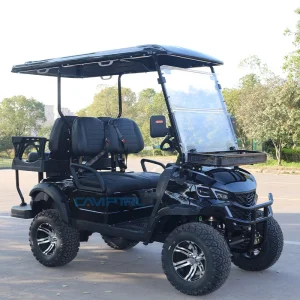
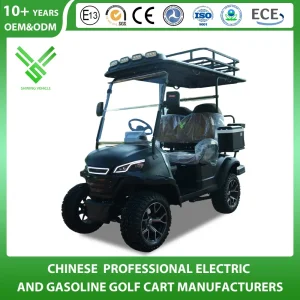
Designed for premium hospitality environments where guest comfort and completely silent operation are critical requirements. These vehicles feature near-zero acoustic footprints, non-marking high-flotation tires to protect manicured turf landscapes, and premium UV-stabilized split-back seating arrangements. Our systems are actively deployed in remote, challenging resort geographies including the Maldives and the Philippines.
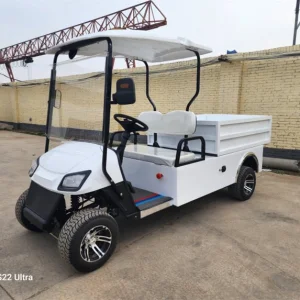
Engineered specifically for heavy-duty industrial transport, material handling, and intra-facility distribution. These configurations feature structural rear aluminum cargo boxes or reinforced utility flatbeds supported by automatic heavy-duty hydraulic assistive struts. They easily handle challenging material movement requirements across manufacturing compounds and distribution centers.
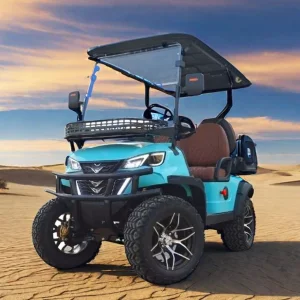
Built on ruggedized, high-ground-clearance suspension geometries and fitted with deep-tread 14-inch aggressive off-road tires. These models incorporate high-torque transaxle gearboxes and integrated heavy-duty aluminum alloy side protection steps. They deliver excellent stability and traction across challenging unimproved pathways, sandy terrain, and steep agricultural grades.
Designed for public safety operations, site security enforcement, and facility maintenance in large urban zones and universities. These street-legal packages feature full DOT-compliant panoramic safety glass windshields, integrated front and rear lighting, automotive-grade hydraulic braking systems, and high-visibility digital dashboard telematics.
Our manufacturing operations provide complete alignment with client design criteria through specialized OEM, ODM, and project-based engineering frameworks. By integrating advanced computer-aided design pipelines directly with scalable robotic assembly lines, we convert client ideas into field-ready fleets.
We partner with established distributors and brand houses to manufacture tailored vehicle lines built exactly to proprietary design specifications. This comprehensive process encompasses custom aerodynamic body shells, brand-specific modular dash panels, specialized seating configurations, and deeply integrated brand logos. All stages are backed by our 24-year ISO-certified quality control system.
For operations looking to accelerate market entry with minimal design development costs, our ODM services provide a fast path to deployment. We design and manufacture comprehensive blueprints that can be customized with your localized branding, tailored collateral materials, and custom multi-lingual user instruction manuals. This allows rapid bulk scaling of custom vehicle configurations.
We deliver comprehensive logistics and fleet mapping services across more than 50 sovereign countries. Our engineering teams review site elevation layouts, operational duty cycles, and environmental exposures to build optimal fleet mix matrices. This custom tailoring ensures high operational reliability for multi-wheeled assets deployed anywhere in the world.
Navigating different international import standards requires rigorous alignment with global manufacturing and safety baselines. Our manufacturing systems maintain comprehensive compliance across major international validation frameworks, protecting our global partners from regulatory and cross-border shipping delays.
| System Node | Technical Engineering Parameter | Regulatory Compliance Standards |
|---|---|---|
| Chassis Architecture | Longitudinal high-strength structural steel beam frame with full-immersion anti-rust treatment. | ISO 9001:2015, Patented Anti-Deformation Design |
| Speed Controller | Solid-state programmable Curtis controllers with adaptive regenerative braking profiles. | UL810A, CE Electromagnetic Compatibility Certified |
| Energy Storage | Deep-cycle Lithium Iron Phosphate (LiFePO4) or premium AGM heavy-duty battery banks. | UN38.3 Transport Safety Certified, IEC 62619 |
| Braking System | Four-wheel automotive hydraulic disc/drum brakes paired with automatic electronic parking brakes. | DOT FMVSS 500 Low-Speed Vehicle Compliance Baseline |
| Enclosure Shell | High-impact, UV-stabilized automotive-grade injection molded ABS or PP body panels. | SGS Environmental Material Certification |
Every vehicle line integrates industry-standard Curtis programmable solid-state controller networks. These modules eliminate mechanical contact degradation points while enabling fine-tuning of top speed ranges, acceleration curves, and energy-recovering regenerative braking systems. This advanced electronic tuning reduces thermal and mechanical stress on the high-efficiency AC induction drivetrains. This extends continuous operating ranges per charge cycle and keeps fleet performance stable under varying operator conditions.
The future of commercial utility fleets depends on deep digital integration. Our forward engineering roadmaps are focused on transforming traditional utility vehicles into smart, telemetry-linked nodes. By deploying integrated CAN-bus network wiring configurations across our newest 2-seater and multi-seater platforms, we enable continuous real-time transmission of critical machine diagnostics.
These telemetry updates send vital tracking data including real-time state-of-charge levels, precise GPS positioning parameters, and structural motor performance indicators straight to centralized operations management platforms. This continuous tracking helps fleet managers implement smart predictive servicing schedules and enforce automated geofenced operating boundaries. These innovations maximize vehicle lifecycles and lower overall total cost of ownership (TCO) across expansive commercial properties worldwide.
Our patented high-strength steel frame longitudinal beam chassis goes through a detailed multi-stage protective process. It starts with physical shot-blasting to remove raw oxides, followed by hot-stage zinc phosphating. The frame then undergoes full-immersion electrophoresis, creating a uniform protective base layer inside and out. Finally, a UV-stabilized electrostatic plastic powder coat is applied and baked. This advanced coating prevents salt air and chemical corrosion from compromising structural integrity, ensuring a long operational life in coastal environments.
Integrated programmable Curtis controllers monitor vehicle operations over a high-speed CAN-bus data network. They prevent drivetrain component damage by managing sudden current spikes and controlling acceleration curves. The controllers feature fine-tuned regenerative braking maps that automatically convert vehicle momentum back into stored battery energy during deceleration and downhill operation. This smart energy management safely extends total vehicle operational range by up to 15% per charge cycle.
Our flexible manufacturing lines accommodate extensive modifications on volume contract orders. Modifiable parameters include electrical system options (48V or 72V LiFePO4 vs AGM setups) and customized physical body panel styles. We also offer specialized seating configurations, multi-tier dash panels with integrated USB charging grids, personalized logo branding placements, and custom rear enclosures. These options include secure lockable fiberglass cargo boxes and automatic hydraulic-assist flatbeds.
Our complete vehicle families are engineered to meet strict international low-speed vehicle standards. Certified configurations carry official CE marks for the European market and conform to DOT FMVSS 500 low-speed vehicle safety requirements in North America. This compliance covers shatterproof laminated windshield safety glass, integrated side mirrors, comprehensive light arrays, and three-point safety harnesses. This allows hassle-free port clearance and legal registration on public access roads where allowed.
Production timelines vary depending on configuration complexity and order volume. Standard baseline fleet configurations are manufactured and ready for export within 30 to 45 business days from initial deposit and design sign-off. Highly customized OEM projects requiring new injection molds or structural frame modifications follow a dedicated milestone path. All shipments are packed into standard heavy-duty ocean shipping containers with custom floor anchor points to ensure secure, damage-free transit to your final destination port.
 E-par Golf Cart